

Project „TWE-Flex“
Intend
„Optimisation and flexibilisation of generation systems for drinking water heating“
Partners



Short description
Drinking water heating (DWH) in buildings is predominantly centralised and, for hygienic and functional reasons, systems are required to keep the distribution system warm. In addition to circulation systems, elect. Temperature maintenance bands (TMB) are used. Central heat generation often fulfils a dual function of heating and heat recovery. While proven algorithms are available for the heating due to the correlation to the outdoor temperature, the prediction of the domestic hot water demand is only possible to a limited extent. In the project, a TMB is therefore to be used as a sensor for DWH distribution systems in order to be able to detect the consumption behaviour centrally. For this purpose, an algorithm with AI technologies is to be developed that has predictive characteristics. This is then to be transferred into 2 services. In the energy service, optimisation and flexibility procedures for common generation systems including data transmission for status detection are to be developed. In the second hygienic service, a detection and monitoring option for the systems with regard to the risk of legionella is to be developed. Two interfaces are to be created as functionality. The first interface comprises the heat generator control. The second interface is to address a non-invasive technology that acts on the hot water tank. With this technology, an alternating magnetic field is generated around the storage tank. The technology will be tested using a HiL environment and in a field test. Since the project will act as a satellite project within the thematic network ‘N5GEH’, the use of the developed platform (phase I) for the planned services will take place. For this purpose, coordination on interfaces and a reflection of the generally valid services to be developed must be carried out. During the project, a constant technical and structural exchange with the service project is necessary.
Use Cases
Within the scope of the N5GEH-TWE-Flex project, the domestic hot water preparation in systems of centralized and decentralized heat supply is the focus of the considerations. For decentralized systems with heat pumps, high temperatures represent a certain hurdle, as this significantly reduces the COP value. For central heat distribution systems (district and local heating systems), there is a tendency toward low system temperatures in order to keep heat losses as low as possible. Worth mentioning here are 4th and 5th generation heat networks. For both types of system (centralized / decentralized), however, it must be taken into account that the hygienic quality of the drinking water must not be impaired if the media temperatures are lowered. This means that legionella growth must be avoided at all costs.
The system to be developed in the N5GEH-TWE-Flex project is intended to create a detection system for monitoring the temperature of the drinking water on the basis of temperature holding bands, which are characterized by a temperature-dependent power consumption. This temperature monitoring system is to enable a reduction of the system temperatures at the heat generator or in the central local and district heating network. Furthermore, it is planned to optimize the operating times of the central hot water generation by detecting tap profiles. In a second step of the study, a fluid liner system will be additionally analyzed and its effect on the growth of Legionella will be described in detail. The R&I scheme documented in the following figure is used as the system architecture.
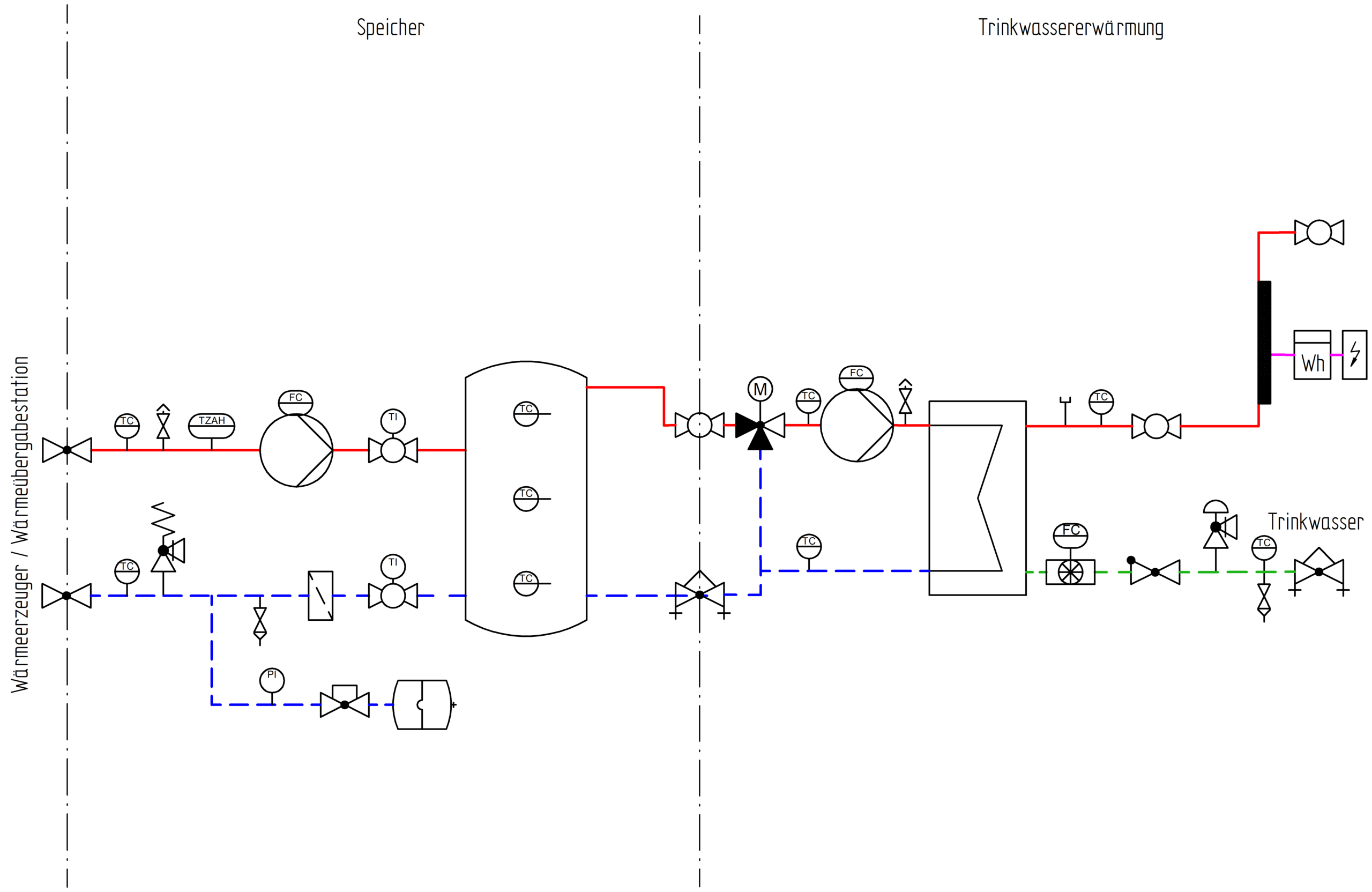
Figure 1: R&I Scheme for the TWE-Flex Use Case
The detection of the different operating states will be performed using the N5GEH’s cloud infrastructure, with various interfaces to the partners’ IOT infrastructure being developed.
Further information for journalists
Prof. Dr.-Ing. habil. Joachim Seifert
Digital Networking of Buildings, Energy Supply Systems and Users
Tel.: +49 (0) 30 314-79458
Mobil: +49 (0) 152 53710720
E-Mail: joachim.seifert@tu-berlin.de
Visitor Address: Marchstraße 4 / 10587 Berlin
Fact sheet
Project Coordination:
Prof. Dr.-Ing. habil.
Joachim Seifert
Contact:
Prof. Dr.-Ing. habil.
Joachim Seifert
(TU Berlin)
Dipl.-Ing.
Lars Schinke
(TU-Dresden)
Dipl. Ing.
Robert Zachrau
(BEW Berliner Energie und Wärme AG)
Dipl.-Ing.(FH)
Andre Lambert
(ELREHA)
Funding:
BMWK (FKZ: 03EN1056A-D)
Funding Period:
04/2022 – 06/2025


Partner Phase I
Partner Phase II
Source Code